Did you know this about mosses?
Mosses are part of the plant kingdom, but they differ from other plants in many ways. Unlike many other plants, mosses do not have roots. Mosses absorb water and nutrients directly through their above-ground parts, and they attach to their substrate using rhizoids. Mosses also do not produce seeds—they reproduce through spores, just like ferns.
Mosses, like coniferous trees, often remain green year-round. Mosses grow in height from the top while the lower part slowly decomposes into peat, humus, or soil. Peat forms only in wet environments and oxygen-poor conditions, and it develops very slowly compared to the growth rate of moss.
There are nearly 900 moss species in Finland. Mosses grow in almost all types of environments, as over their long evolutionary history they have adapted and specialized to live on different substrates and under varying conditions. Not all mosses need much moisture—some thrive in very dry and barren places.
Finns have traditionally used mosses in many different ways. Finland’s most common moss species, the red-stemmed feather moss, even got its Finnish name from one of these uses. Moss was used as insulation between the logs of wooden houses. Mosses contain antimicrobial compounds, which is why they have also been used in healthcare and preservation. One well-known antimicrobial moss is sphagnum moss, which has long been used to treat various skin conditions and wounds. Even today, sphagnum moss is used, for example, in the preservation and transportation of archaeological finds.
Haircap moss, on the other hand, got its name from a different use. Bears use soft haircap moss to line their winter dens. Haircap moss is one of the most common mosses in our forests, alongside red-stemmed feather moss and sphagnum moss.
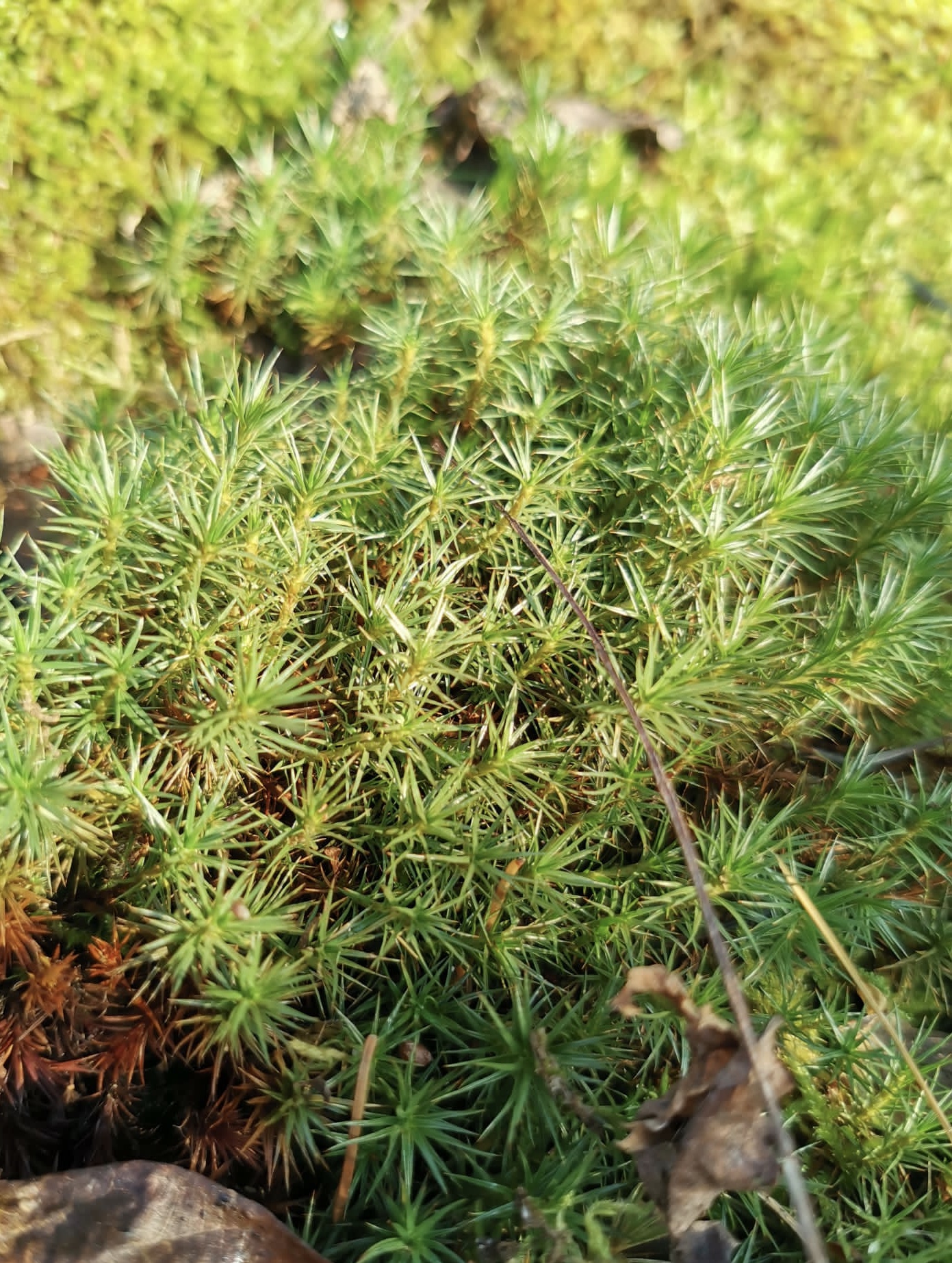
Haircap moss
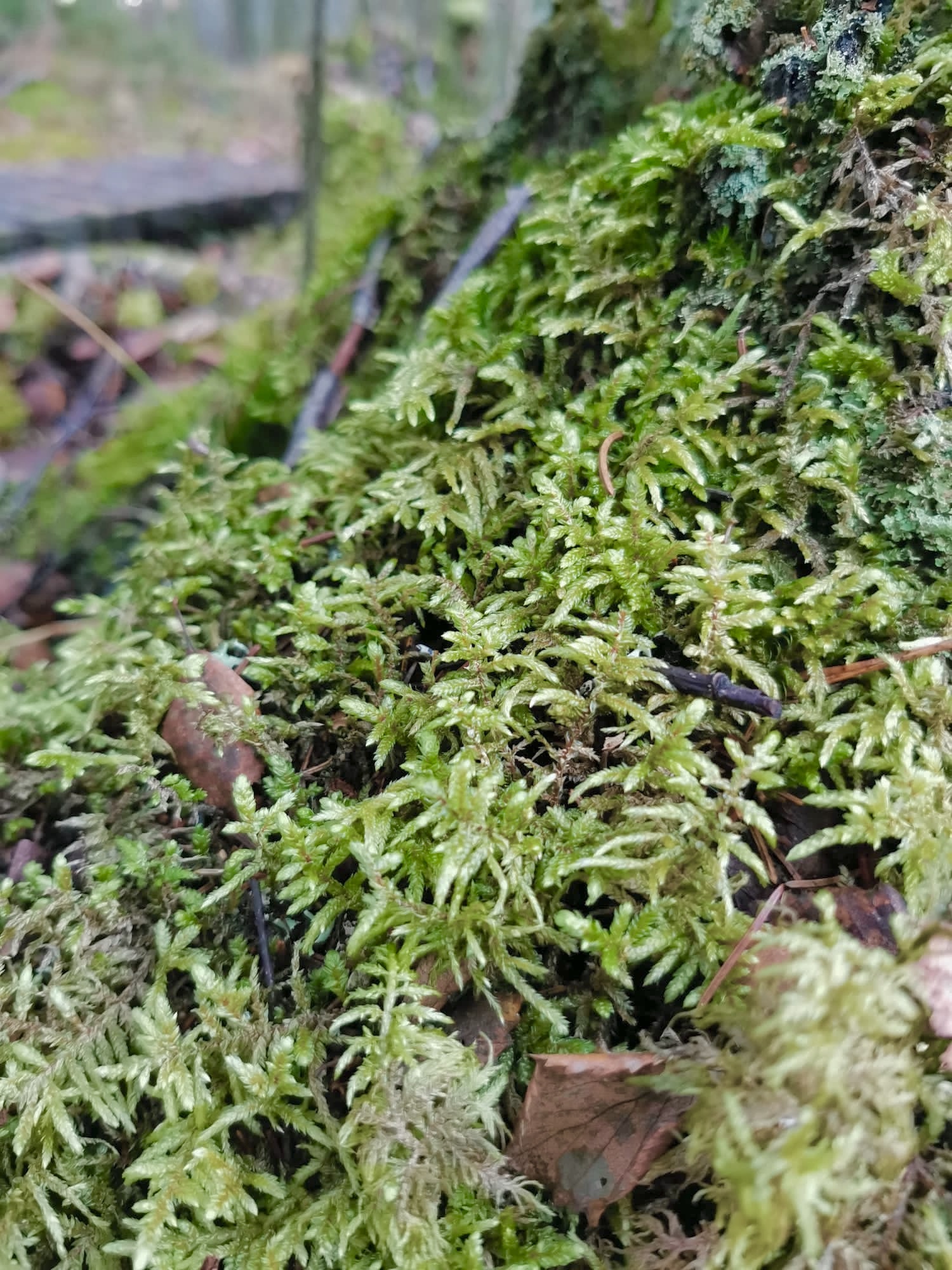
Red-stemmed feather moss
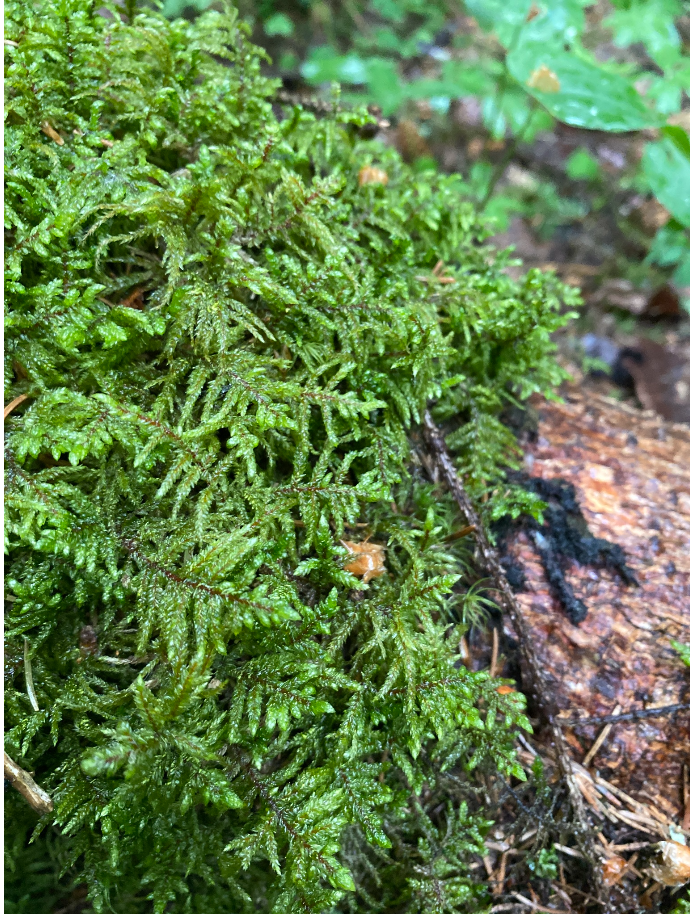
Sphagnum moss
Photos: Suvi Hakulinen, Aura River Foundation