Mushrooms of the Aura River Valley
Mushrooms play a very important role in nature, as they not only act as decomposers but also interact with the plant kingdom. Mycorrhizal fungi help plants with nutrient and water absorption, forming extensive networks that connect individual plants. Recent studies suggest that fungi also help trees communicate with each other, warn of diseases, and other dangers. Mushrooms contribute to the breakdown of dead plant and animal matter, releasing nutrients back into the ecosystem, thus enabling new growth.
There are around 8,000 different species of fungi known in Finland, and new species are constantly being discovered. Mushrooms grow everywhere and can be found in many types of environments. However, many species prefer specific habitats. Knowing what kind of environment a particular mushroom species prefers makes them easier to find. Some fungi are root fungi, thriving in association with certain tree species. For example, the funnel chanterelle is a root fungus of spruce, so it is best searched for in spruce forests. Some mushrooms also prefer so-called cultural environments, meaning they are commonly found in parks and gardens. One example is the springtime false morel, which often appears in bark mulch around garden plantings.
Humans have long used mushrooms as food. Mushrooms are nutritious, and foraging for them falls under Finland’s Everyman’s Rights. Collecting mushrooms for food always requires proper identification. If you are not completely sure what species you have found, it is best to leave it be. Many edible mushrooms are easy to identify, but some can be confused with poisonous species. A good way to start mushroom foraging is to learn the most common edible mushrooms and the most common poisonous ones. A mushroom guidebook or online identification tools can be helpful. The best way to learn is to join an experienced forager on a mushroom trip. The Aura River Valley provides excellent opportunities for identifying and collecting mushrooms.
Did you know that you may encounter hair ice caused by fungi in the area’s deciduous forests? Read more about hair ice here.
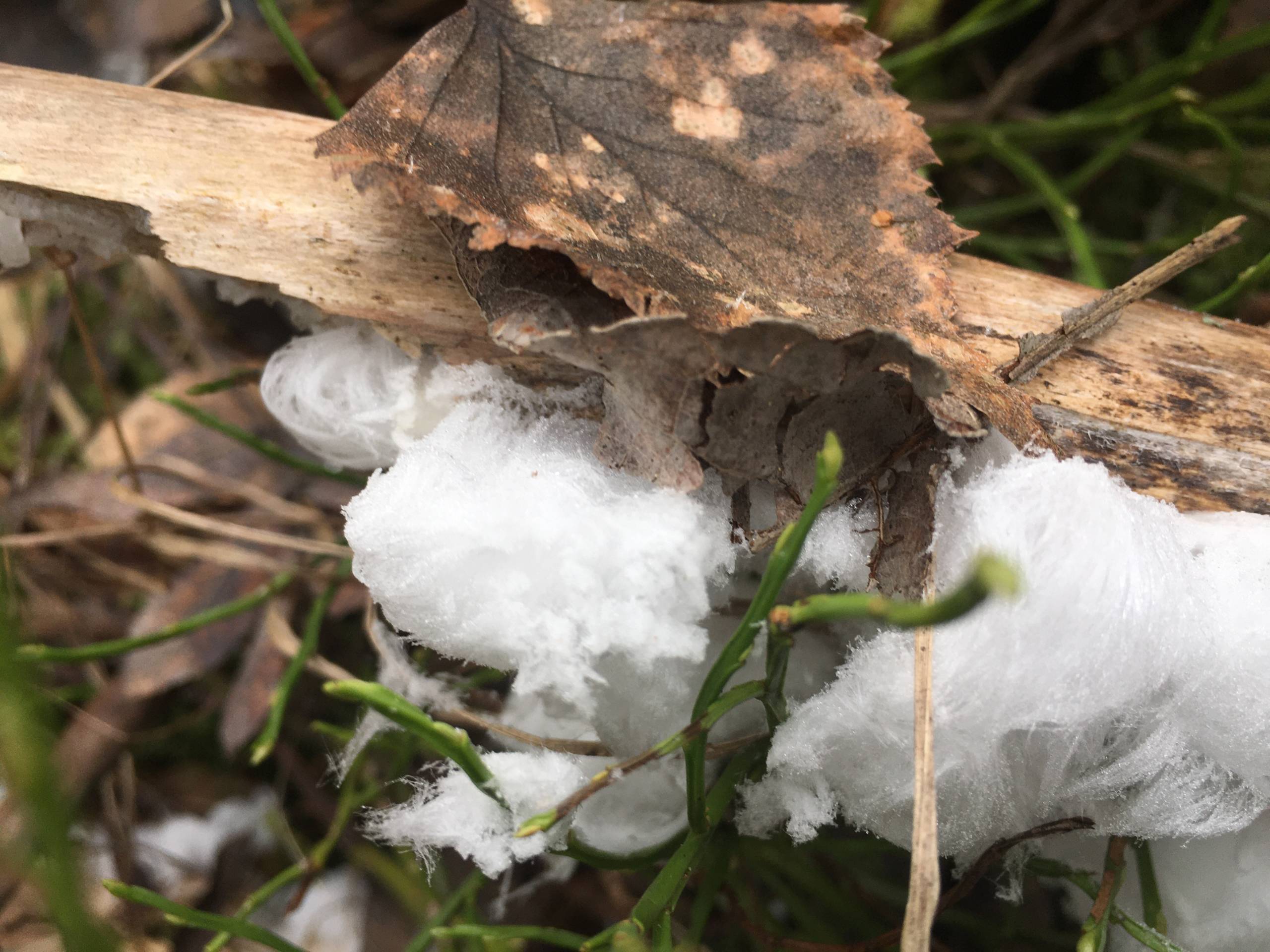
Hair ice from Vanhalinna, Lieto, photo: Suvi Hakulinen, Aura River Foundation
Common Edible Mushrooms and Their Habitats:: The name of a mushroom can often indicate the type of tree it associates with, though it doesn’t always exclude other possibilities. For example, the oak bolete is a root fungus of oak, hazel, and bird cherry trees.
Deciduous forest:
red-capped bolete (deciduous forest bolete), aspen bolete, oak porcini, black trumpet
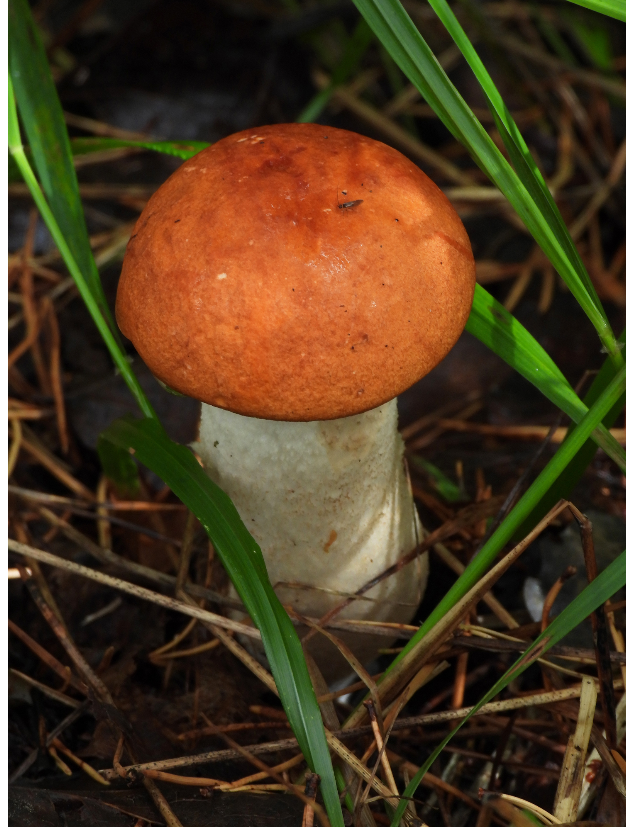
Aspen bolete, photo: Kari Pihlaviita
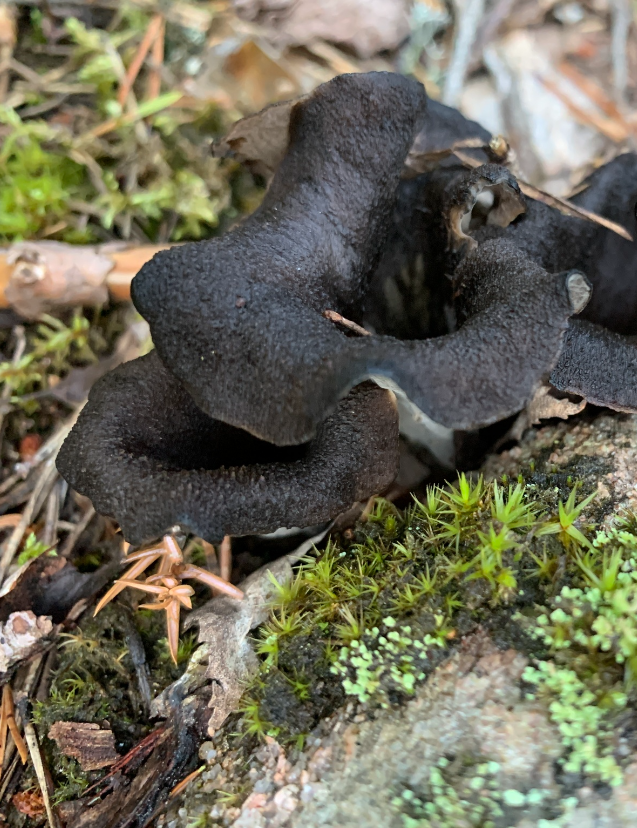
Black chanterelle, photo: Panu Kujala
Fresh coniferous forest:
chanterelle, birch bolete, sheep polypore, porcini, funnel chanterelle
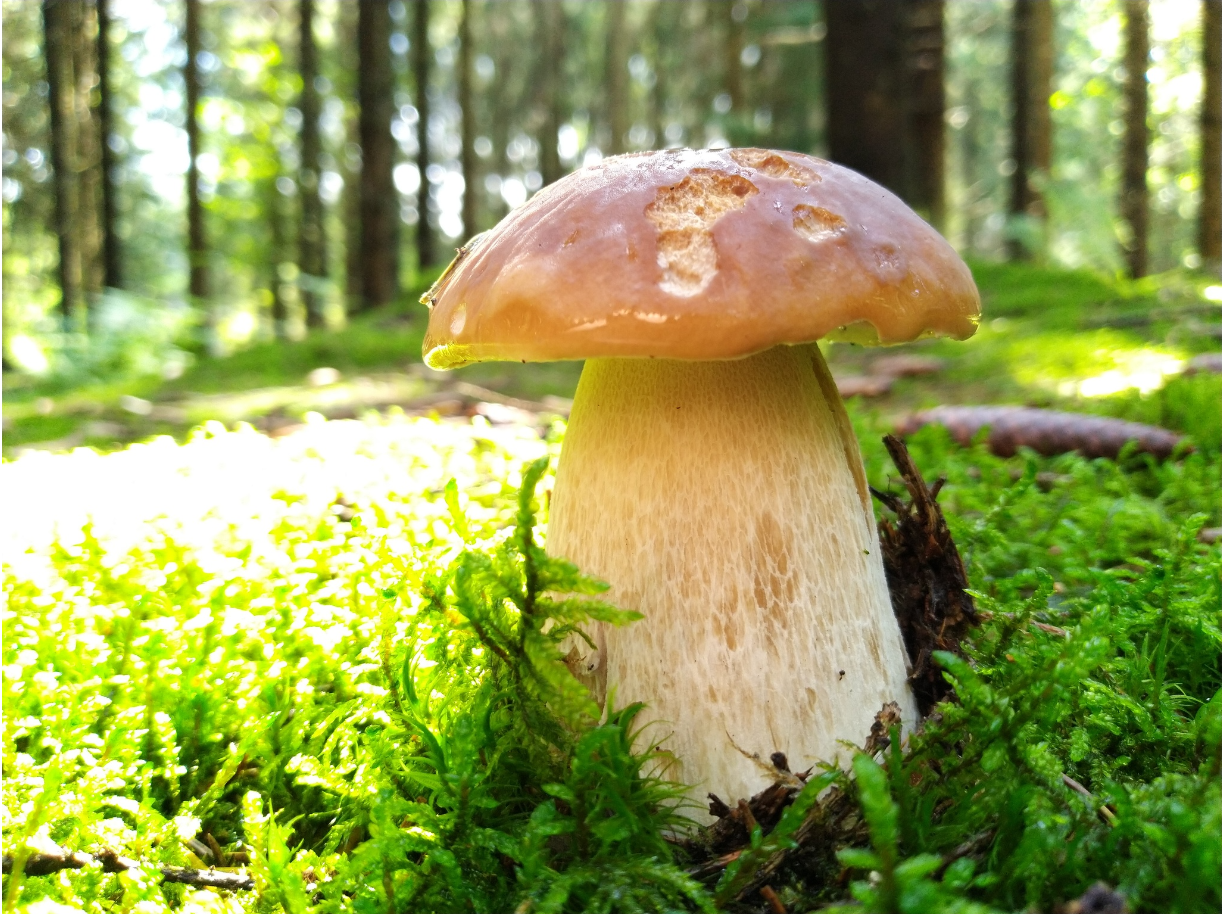
King bolete, photo: karitelo
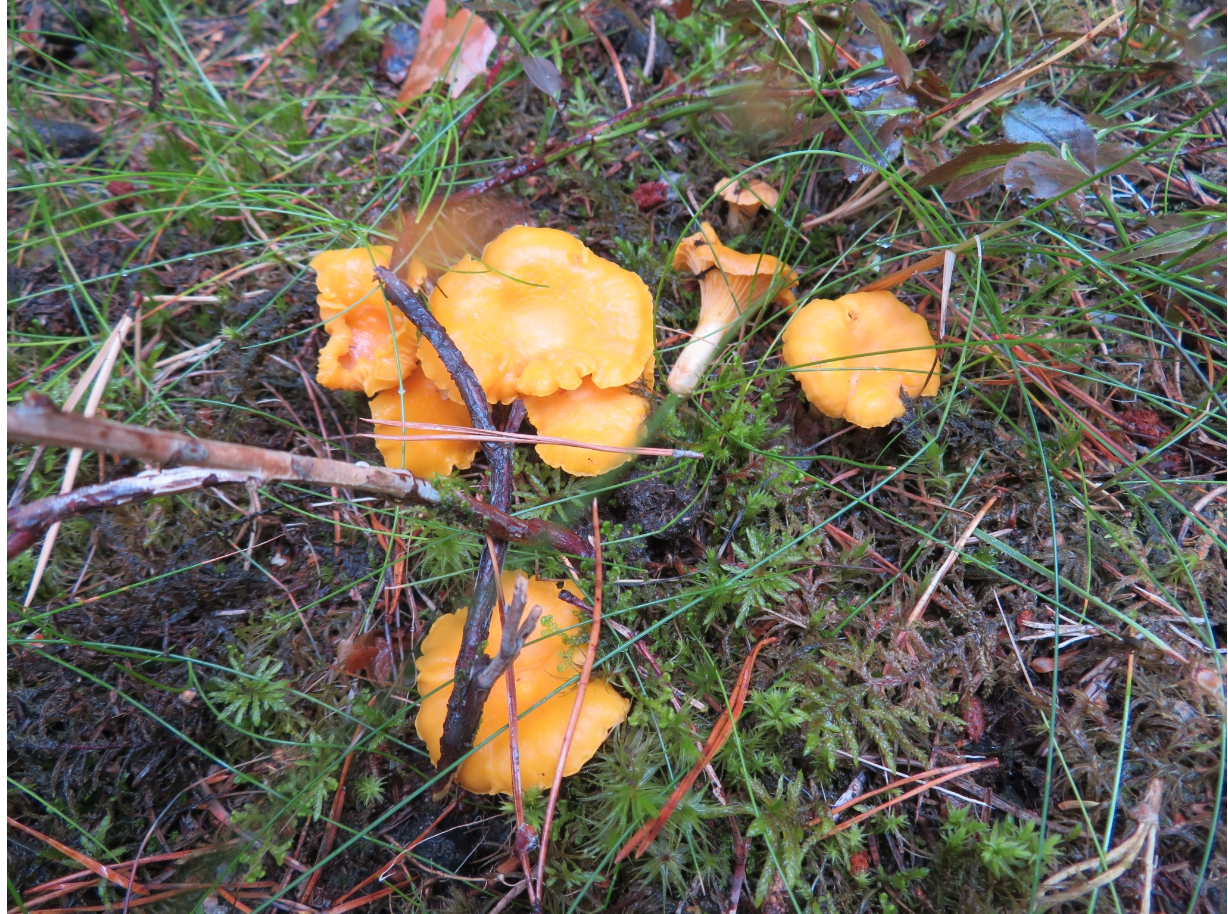
Yellow chanterelle, photo: Juha Tuomola
Deciduous forest:
red-capped bolete (deciduous forest bolete), aspen bolete, oak porcini, black trumpet
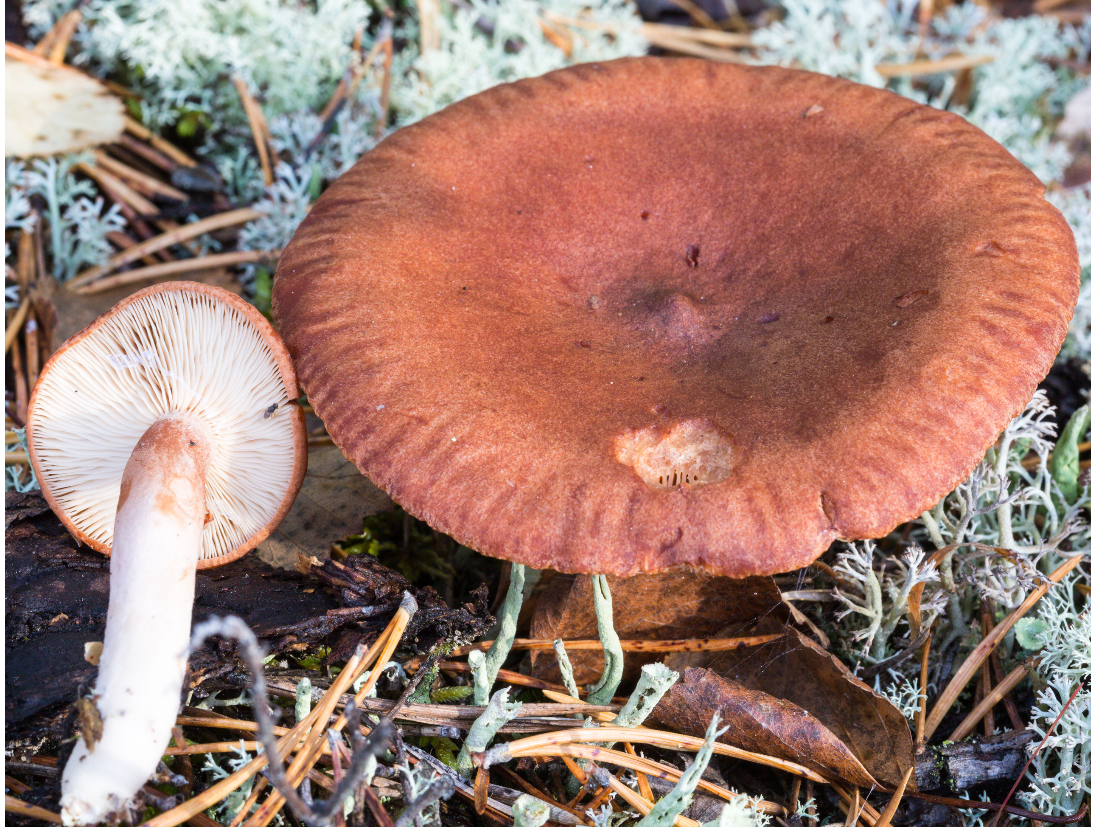
Birch milkcap, photo: Alpo Huhmarniemi

Giant mottlegill, photo: onari
From Luontoportti and various apps you can get help identifying mushrooms
Test your knowledge with Yle’s mushroom identification test
Cover image: Ville Autio, Aurajoki Foundation